



Freshwater Aquarium Rocks
Freshwater Aquarium Rocks
Discover which rocks to use in a freshwater aquarium, their influence on pH, GH, and KH, as well as the best stones for aquascaping and different biotopes.
Freshwater Aquarium Rocks: The Complete Guide and Their Influence on Water Parameters
Rocks play an essential role in a freshwater aquarium. Far more than just a decorative element, they help create a natural environment, provide hiding places for fish, and can directly influence water parameters.
Some rocks are completely neutral, while others gradually alter the pH, GH, or KH. Choosing them wisely allows you to faithfully reproduce a biotope and ensure the well-being of your aquarium inhabitants.
In this guide, discover the main rocks used in aquascaping, their characteristics, advantages, and their influence on the balance of your aquarium.
Why Use Rocks in a Freshwater Aquarium?
Rocks serve several important functions.
They notably allow you to:
- create a natural decor;
- structure the space;
- provide hiding places for shy fish;
- delineate territories for territorial species;
- serve as a support for mosses and epiphytic plants;
- host nitrogen cycle bacteria.
Certain species, such as Ancistrus, Corydoras, or many Cichlids, particularly appreciate rocky decorations.
Are All Rocks Suitable for an Aquarium?
The answer is no.
Not all rocks are suitable for use in an aquarium.
Some can:
- leach minerals;
- alter water parameters;
- contain heavy metals;
- be friable;
- have sharp edges that can harm fish.
Choosing a rock should therefore never be based solely on aesthetics. It is essential to check its composition and origin before introducing it into an aquarium.
Why Do Some Rocks Alter Water Parameters?
The geological composition of a rock determines its behavior once submerged.
There are generally two main families.
Neutral Rocks
They are mainly composed of silica or volcanic rocks.
They have very little effect on:
- pH;
- GH;
- KH.
These are the preferred rocks for:
- Amazonian aquariums;
- Aquascapes;
- Shrimp tanks;
- Heavily planted aquariums.
Limestone Rocks
These rocks contain calcium carbonate.
When in contact with water, they gradually release minerals that increase:
- GH;
- KH;
- sometimes pH.
They are more suitable for species naturally living in hard water.
Understanding GH, KH, and pH
Before choosing a rock, it is important to understand these three parameters.
GH (General Hardness)
GH measures the amount of dissolved calcium and magnesium in the water.
A limestone rock can gradually increase this value.
Higher GH is suitable for example:
- Guppies;
- Platys;
- Mollys;
- certain African Cichlids.
Conversely, species such as Discus or Cardinalis generally prefer much softer water.
KH (Carbonate Hardness)
KH represents the buffering capacity of the water.
The higher it is:
- the more stable the pH;
- the harder it becomes to lower the pH.
Limestone rocks often also increase KH.
pH
pH measures the acidity or alkalinity of the water.
A rock does not always directly alter the pH.
However, when it increases KH, it can gradually lead to a rise in pH.
This is why it is important to observe all parameters rather than just a single measurement.
How to Know if a Rock is Limestone?
There is a very simple test. Place a few drops of white vinegar on the rock. If effervescence appears immediately, the rock probably contains limestone. For an even more reliable result, some aquarists use a few drops of diluted hydrochloric acid (with the necessary safety precautions). However, be aware: the absence of a reaction does not guarantee that a rock is completely neutral. Some rocks release minerals very slowly.
Can You Collect Rocks in Nature?
Yes, but with caution.
Before any use, it is necessary to check:
- they do not come from a polluted area;
- they do not contain visible metals;
- they do not have an unusual odor;
- they are not friable.
Some rocks collected in the mountains are perfectly suitable, while others may contain undesirable substances.
How to Clean a Rock Before Installing It?
A rock should always be cleaned before being introduced into an aquarium.
It is recommended to:
- brush it under clear water;
- remove soil deposits;
- eliminate dust;
- rinse thoroughly.
Household products should be avoided.
In most cases, simple mechanical cleaning is sufficient.
Rocks and Bacteria
Rock surfaces provide an excellent substrate for nitrifying bacteria. The more porous a rock is, the more colonizable surface it offers. Some volcanic rocks, such as lava rock, are particularly appreciated for this reason. They thus contribute to the proper biological functioning of the aquarium.
Choosing a Rock According to Your Aquarium
Not all species have the same needs.
Here are some examples.
| Aquarium Type | Recommended Rocks |
|---|---|
| Amazonian Aquarium | Dragon Stone, Lava Rock, Basalt |
| Aquascaping | Dragon Stone, Seiryu Stone*, Lava Rock |
| Shrimp Tank | Dragon Stone, Basalt, Quartz |
| Asian Aquarium | Dragon Stone, Slate |
| African Cichlids | Seiryu Stone, Texas Holey Rock, Limestone |
*Seiryu Stone is very popular in aquascaping but it gradually increases water hardness. This effect should be taken into account depending on the species kept.
The Main Neutral Rocks
Neutral rocks have the advantage of not significantly altering water parameters. They are the best choice for most freshwater aquariums.
Dragon Stone (Ohko Stone)
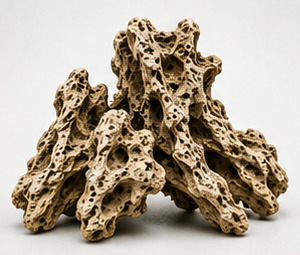
Dragon Stone, also known as Ohko Stone, is probably the most famous rock in aquascaping.
Originating from Asia, it has a very characteristic texture, composed of numerous cavities that resemble a dragon's skin, hence its name.
Very light and easy to work with, it allows the creation of natural decorations that are particularly appreciated in planted aquariums.
Influence on Parameters
| Parameter | Influence |
|---|---|
| pH | ⭐☆☆☆☆ |
| GH | ⭐☆☆☆☆ |
| KH | ⭐☆☆☆☆ |
Dragon Stone is considered practically neutral.
Advantages
- Very natural appearance.
- Excellent for aquascaping.
- Easy to assemble.
- Compatible with most fish.
- Promotes moss attachment.
Disadvantages
- Very friable when brushed.
- Cavities easily trap dirt.
Ideal for
- Dutch aquarium
- Iwagumi
- Asian biotope
- Amazonian aquarium
- Shrimp tank
Lava Rock
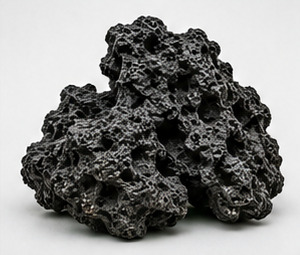
Originating from ancient volcanic flows, lava rock is extremely porous.
Its structure offers a huge colonizable surface for nitrifying bacteria.
It is often used both as decoration and as a biological support in filters.
Influence on Parameters
| Parameter | Influence |
|---|---|
| pH | ⭐☆☆☆☆ |
| GH | ⭐☆☆☆☆ |
| KH | ⭐☆☆☆☆ |
Advantages
- Very light.
- Excellent bacterial support.
- Natural appearance.
- Ideal for mosses.
- Generally affordable.
Disadvantages
- Abrasive surface.
- May injure certain long-finned fish.
Recommended for
- Planted aquariums
- Terrariums
- Shrimp tanks
- Filtration support
Basalt
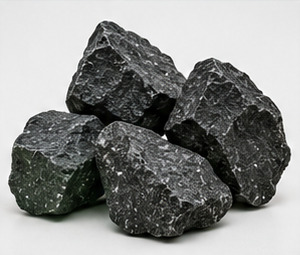
Basalt is a very dense volcanic rock, dark gray to black in color.
Its sober appearance highlights plants and colorful fish.
Very stable, it is widely used in natural aquariums.
Influence on Parameters
| Parameter | Influence |
|---|---|
| pH | ⭐☆☆☆☆ |
| GH | ⭐☆☆☆☆ |
| KH | ⭐☆☆☆☆ |
Advantages
- Very durable.
- Does not degrade.
- Elegant color.
- Fully compatible with Amazonian aquariums.
Disadvantages
- Heavier than average.
- Little relief depending on the blocks.
Granite
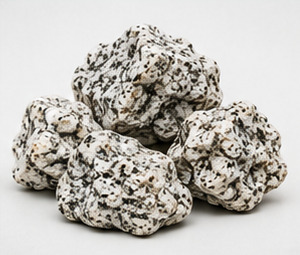
Granite is an igneous rock composed mainly of quartz, feldspar, and mica.
Contrary to popular belief, healthy granite is generally neutral.
It offers a very natural look in large aquariums.
Influence on Parameters
| Parameter | Influence |
|---|---|
| pH | ⭐☆☆☆☆ |
| GH | ⭐☆☆☆☆ |
| KH | ⭐☆☆☆☆ |
Advantages
- Extremely solid.
- Easily available.
- Inexpensive.
- Very durable.
Disadvantages
- Sometimes less spectacular appearance.
- Heavy.
Quartz
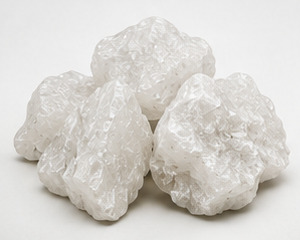
Quartz is mainly composed of silica.
It is completely inert in the aquarium.
It comes in different colors:
- white;
- gray;
- pink;
- smoky.
Influence on Parameters
| Parameter | Influence |
|---|---|
| pH | ⭐☆☆☆☆ |
| GH | ⭐☆☆☆☆ |
| KH | ⭐☆☆☆☆ |
Advantages
- Very decorative.
- Does not alter the water.
- Easy to clean.
Disadvantages
- Some blocks have sharp edges.
- Low porosity.
Slate
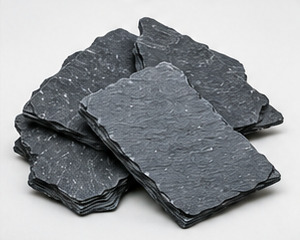
Slate is highly appreciated for creating terraces or reliefs.
Its naturally flat shape makes construction easier.
It is widely used in modern aquascapes.
Influence on Parameters
| Parameter | Influence |
|---|---|
| pH | ⭐☆☆☆☆ |
| GH | ⭐☆☆☆☆ |
| KH | ⭐☆☆☆☆ |
Advantages
- Easy to stack.
- Natural appearance.
- Ideal for creating terraces.
- Very stable.
Disadvantages
- Sometimes sharp edges.
- Little texture.
Schiste
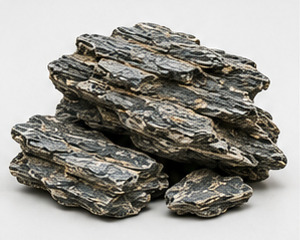
Schist has a very aesthetic foliated structure.
Depending on its origin, it is generally neutral, but some varieties may contain mineral inclusions.
It is advisable to perform a test before use.
Influence on Parameters
| Parameter | Influence |
|---|---|
| pH | ⭐☆☆☆☆ |
| GH | ⭐☆☆☆☆ |
| KH | ⭐☆☆☆☆ |
Advantages
- Original texture.
- Many reliefs.
- Very natural appearance.
Disadvantages
- Some slabs are fragile.
- Quality varies depending on origin.
Gneiss
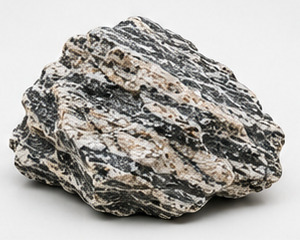
Gneiss is a metamorphic rock recognizable by its alternating color bands.
Widely used in natural landscapes, it adds a lot of character to large aquariums.
Influence on Parameters
| Parameter | Influence |
|---|---|
| pH | ⭐☆☆☆☆ |
| GH | ⭐☆☆☆☆ |
| KH | ⭐☆☆☆☆ |
Advantages
- Very aesthetic.
- Extremely solid.
- Compatible with most biotopes.
Disadvantages
- More difficult to find in stores.
- Relatively heavy.
Comparison of Neutral Rocks
| Rock | pH | GH | KH | Aquascaping | Amazonian | Shrimp |
|---|---|---|---|---|---|---|
| Dragon Stone | ⭐☆☆☆☆ | ⭐☆☆☆☆ | ⭐☆☆☆☆ | ⭐⭐⭐⭐⭐ | ⭐⭐⭐⭐⭐ | ⭐⭐⭐⭐⭐ |
| Lava Rock | ⭐☆☆☆☆ | ⭐☆☆☆☆ | ⭐☆☆☆☆ | ⭐⭐⭐⭐☆ | ⭐⭐⭐⭐⭐ | ⭐⭐⭐⭐⭐ |
| Basalt | ⭐☆☆☆☆ | ⭐☆☆☆☆ | ⭐☆☆☆☆ | ⭐⭐⭐⭐☆ | ⭐⭐⭐⭐⭐ | ⭐⭐⭐⭐☆ |
| Granite | ⭐☆☆☆☆ | ⭐☆☆☆☆ | ⭐☆☆☆☆ | ⭐⭐⭐☆☆ | ⭐⭐⭐⭐☆ | ⭐⭐⭐☆☆ |
| Quartz | ⭐☆☆☆☆ | ⭐☆☆☆☆ | ⭐☆☆☆☆ | ⭐⭐⭐☆☆ | ⭐⭐⭐☆☆ | ⭐⭐⭐⭐☆ |
| Slate | ⭐☆☆☆☆ | ⭐☆☆☆☆ | ⭐☆☆☆☆ | ⭐⭐⭐⭐⭐ | ⭐⭐⭐☆☆ | ⭐⭐⭐☆☆ |
| Schist | ⭐☆☆☆☆ | ⭐☆☆☆☆ | ⭐☆☆☆☆ | ⭐⭐⭐⭐☆ | ⭐⭐⭐⭐☆ | ⭐⭐⭐☆☆ |
| Gneiss | ⭐☆☆☆☆ | ⭐☆☆☆☆ | ⭐☆☆☆☆ | ⭐⭐⭐☆☆ | ⭐⭐⭐⭐☆ | ⭐⭐⭐☆☆ |
Note: If you are looking for a rock with no significant influence on water parameters, Dragon Stone, Lava Rock, Basalt, or Slate are excellent choices. They are suitable for most freshwater aquariums and offer great freedom for aquascaping.
Limestone Rocks
Unlike neutral rocks, limestone rocks gradually release carbonates and minerals into the water.
Their effects are generally as follows:
- increase in GH;
- increase in KH;
- slight increase in pH.
These characteristics are not necessarily a disadvantage.
Some species naturally appreciate hard and alkaline water.
This is particularly true for many African Cichlids living in Lakes Tanganyika and Malawi.
Seiryu Stone
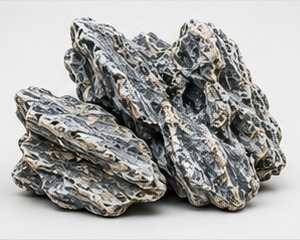
Seiryu Stone is undoubtedly the most iconic rock in modern aquascaping. Highly appreciated for its pronounced reliefs and bluish-gray color, it allows the creation of spectacular landscapes. Contrary to popular belief, it is not completely neutral.
Influence on Parameters
| Parameter | Influence |
|---|---|
| pH | ⭐⭐⭐☆☆ |
| GH | ⭐⭐⭐⭐☆ |
| KH | ⭐⭐⭐⭐☆ |
Advantages
- Spectacular appearance.
- Widely used in aquascaping.
- Many shapes available.
Disadvantages
- Gradually increases water hardness.
- Not suitable for species requiring very soft water.
Recommended for
- Aquascaping
- Cichlid tanks
- Aquariums with moderately hard water
Texas Holey Rock
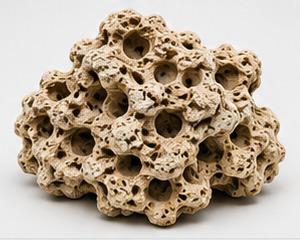
Texas Holey Rock is a very porous limestone rock. Its numerous cavities provide excellent hiding places for territorial fish. It is particularly popular in African Cichlid aquariums.
Influence on Parameters
| Parameter | Influence |
|---|---|
| pH | ⭐⭐⭐⭐☆ |
| GH | ⭐⭐⭐⭐⭐ |
| KH | ⭐⭐⭐⭐⭐ |
Advantages
- Many hiding places.
- Very aesthetic.
- Promotes natural behaviors of Cichlids.
Disadvantages
- Not recommended for Amazonian species.
- Strongly alters water parameters.
Limestone
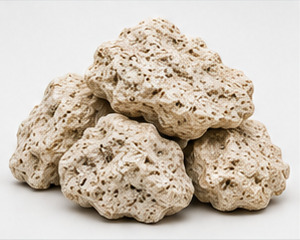
Limestone is easily recognizable thanks to the vinegar test.
It is rarely used in Amazonian aquariums but fits perfectly in tanks intended for species living in hard water.
Influence on Parameters
| Parameter | Influence |
|---|---|
| pH | ⭐⭐⭐⭐☆ |
| GH | ⭐⭐⭐⭐⭐ |
| KH | ⭐⭐⭐⭐⭐ |
Recommended for
- African Cichlids
- Guppies
- Platys
- Mollies
Travertine
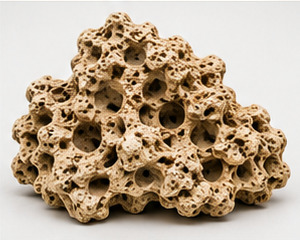
Travertine is a porous limestone rock, often used in decoration.
Its honeycombed texture provides many hiding places for fish. Like all limestone rocks, it gradually increases water hardness.
Influence on Parameters
| Parameter | Influence |
|---|---|
| pH | ⭐⭐⭐⭐☆ |
| GH | ⭐⭐⭐⭐☆ |
| KH | ⭐⭐⭐⭐☆ |
Dolomite
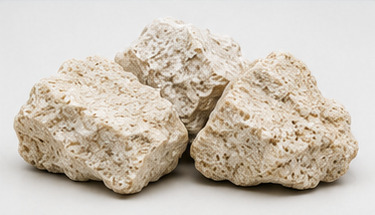
Dolomite is a rock rich in calcium and magnesium.
It is sometimes used to naturally remineralize very soft water.
Influence on Parameters
| Parameter | Influence |
|---|---|
| pH | ⭐⭐⭐☆☆ |
| GH | ⭐⭐⭐⭐⭐ |
| KH | ⭐⭐⭐⭐☆ |
Marble
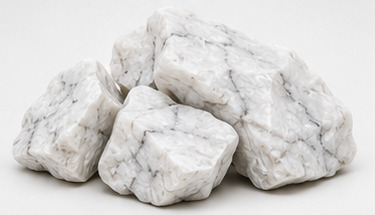
Marble is a metamorphic rock derived from limestone.
Although very aesthetic, it gradually influences water parameters.
It is therefore rarely recommended in Amazonian aquariums.
Influence on Parameters
| Parameter | Influence |
|---|---|
| pH | ⭐⭐⭐⭐☆ |
| GH | ⭐⭐⭐⭐⭐ |
| KH | ⭐⭐⭐⭐☆ |
Rocks to Avoid
Some rocks should never be introduced into an aquarium without prior verification.
Avoid in particular:
- rocks containing visible metal traces;
- stones from industrial or polluted areas;
- friable rocks that crumble easily;
- stones with extremely sharp edges for fish;
- chemically treated or painted rocks.
In case of doubt, it is better to choose rocks sold specifically for aquariums.
Which rock to choose according to your aquarium?
| Your aquarium | Recommended rocks |
|---|---|
| Amazonian | Dragon Stone, Basalt, Lava Rock |
| Aquascaping | Dragon Stone, Seiryu Stone* |
| Asian | Dragon Stone, Slate |
| Shrimp | Basalt, Dragon Stone, Quartz |
| African Cichlids | Texas Holey Rock, Limestone, Travertine |
*Regularly monitor GH and KH if you use Seiryu Stone in an aquarium intended for species that prefer very soft water.
Comparative Table of Main Rocks
The table below summarizes the characteristics of the most commonly used rocks in freshwater aquariums.
| Rock | pH Influence | GH Influence | KH Influence | Aquascaping | Amazonian | African Cichlids | Beginner |
|---|---|---|---|---|---|---|---|
| Dragon Stone | ⭐☆☆☆☆ | ⭐☆☆☆☆ | ⭐☆☆☆☆ | ⭐⭐⭐⭐⭐ | ⭐⭐⭐⭐⭐ | ⭐⭐☆☆☆ | ⭐⭐⭐⭐⭐ |
| Lava Rock | ⭐☆☆☆☆ | ⭐☆☆☆☆ | ⭐☆☆☆☆ | ⭐⭐⭐⭐☆ | ⭐⭐⭐⭐⭐ | ⭐⭐⭐☆☆ | ⭐⭐⭐⭐⭐ |
| Basalt | ⭐☆☆☆☆ | ⭐☆☆☆☆ | ⭐☆☆☆☆ | ⭐⭐⭐⭐☆ | ⭐⭐⭐⭐⭐ | ⭐⭐⭐☆☆ | ⭐⭐⭐⭐⭐ |
| Granite | ⭐☆☆☆☆ | ⭐☆☆☆☆ | ⭐☆☆☆☆ | ⭐⭐⭐☆☆ | ⭐⭐⭐⭐☆ | ⭐⭐⭐☆☆ | ⭐⭐⭐⭐☆ |
| Quartz | ⭐☆☆☆☆ | ⭐☆☆☆☆ | ⭐☆☆☆☆ | ⭐⭐⭐☆☆ | ⭐⭐⭐☆☆ | ⭐⭐⭐☆☆ | ⭐⭐⭐⭐☆ |
| Slate | ⭐☆☆☆☆ | ⭐☆☆☆☆ | ⭐☆☆☆☆ | ⭐⭐⭐⭐⭐ | ⭐⭐⭐☆☆ | ⭐⭐⭐☆☆ | ⭐⭐⭐⭐☆ |
| Schist | ⭐☆☆☆☆ | ⭐☆☆☆☆ | ⭐☆☆☆☆ | ⭐⭐⭐⭐☆ | ⭐⭐⭐⭐☆ | ⭐⭐⭐☆☆ | ⭐⭐⭐☆☆ |
| Gneiss | ⭐☆☆☆☆ | ⭐☆☆☆☆ | ⭐☆☆☆☆ | ⭐⭐⭐☆☆ | ⭐⭐⭐⭐☆ | ⭐⭐⭐☆☆ | ⭐⭐⭐☆☆ |
| Seiryu Stone | ⭐⭐⭐☆☆ | ⭐⭐⭐⭐☆ | ⭐⭐⭐⭐☆ | ⭐⭐⭐⭐⭐ | ⭐⭐☆☆☆ | ⭐⭐⭐⭐☆ | ⭐⭐⭐☆☆ |
| Texas Holey Rock | ⭐⭐⭐⭐☆ | ⭐⭐⭐⭐⭐ | ⭐⭐⭐⭐⭐ | ⭐⭐☆☆☆ | ⭐☆☆☆☆ | ⭐⭐⭐⭐⭐ | ⭐⭐⭐⭐☆ |
| Travertine | ⭐⭐⭐⭐☆ | ⭐⭐⭐⭐☆ | ⭐⭐⭐⭐☆ | ⭐⭐☆☆☆ | ⭐☆☆☆☆ | ⭐⭐⭐⭐⭐ | ⭐⭐⭐⭐☆ |
| Limestone | ⭐⭐⭐⭐☆ | ⭐⭐⭐⭐⭐ | ⭐⭐⭐⭐⭐ | ⭐☆☆☆☆ | ⭐☆☆☆☆ | ⭐⭐⭐⭐⭐ | ⭐⭐⭐⭐☆ |
| Dolomite | ⭐⭐⭐☆☆ | ⭐⭐⭐⭐⭐ | ⭐⭐⭐⭐☆ | ⭐⭐☆☆☆ | ⭐☆☆☆☆ | ⭐⭐⭐⭐⭐ | ⭐⭐⭐☆☆ |
| Marble | ⭐⭐⭐⭐☆ | ⭐⭐⭐⭐⭐ | ⭐⭐⭐⭐☆ | ⭐⭐☆☆☆ | ⭐☆☆☆☆ | ⭐⭐⭐⭐☆ | ⭐⭐⭐☆☆ |
How to Choose the Right Rock?
Before buying a rock, ask yourself a few questions.
What type of aquarium do you have?
An Amazonian aquarium will require neutral rocks, while an African Cichlid aquarium can benefit from limestone rocks that naturally increase water hardness.
Which fish do you keep?
Some species live exclusively in soft, acidic water, while others prefer alkaline water rich in minerals.
Choosing a suitable rock helps to more accurately reproduce their natural environment.
What look do you want to achieve?
Preferences vary among aquarists.
- The Dragon Stone is ideal for a natural landscape.
- The Seiryu Stone is highly appreciated in aquascaping.
- Lava Rock adds a more raw and volcanic touch.
- Slate makes it easy to create terraces and reliefs.
Frequently Asked Questions
Are all white stones limestone?
No.
Some white stones are mainly composed of quartz and are completely neutral.
The vinegar test allows you to quickly check if a rock contains limestone.
Can you collect stones in the wild?
Yes, provided they come from a clean environment and pose no risk of pollution.
Avoid stones:
- located near busy roads;
- from industrial areas;
- covered with chemicals or hydrocarbons.
When in doubt, choose rocks sold specifically for aquariums.
Should you boil rocks?
It is generally not necessary.
Cleaning with clear water and a brush is sufficient in most cases.
Some rocks may even crack due to sudden temperature changes.
Do Dragon Stones really change the parameters?
In most aquariums, their influence is negligible.
However, there may be slight variations depending on their geological origin.
Regular monitoring of the parameters is recommended after any significant change in the decor.
Why does my pH increase after adding new stones?
The most common cause is the presence of limestone.
The carbonates released into the water gradually increase the KH and then the pH.
The phenomenon may take several weeks to become visible.
Do rocks replace artificial hiding places?
Yes, in many cases.
Properly stabilized stacks of stones provide excellent shelters for territorial fish, shrimp, and shy species.
Can plants grow on rocks?
Yes.
Some plants particularly appreciate this type of support.
For example:
- Anubias ;
- Microsorum pteropus (fougère de Java) ;
- Bucephalandra ;
- Different aquatic mosses.
These plants should not be buried in the substrate but attached directly to the rock.
Our Recommendations
If you are new to aquariums, opt for neutral rocks.
Dragon Stone, lava rock, or basalt are excellent choices and are suitable for most freshwater aquariums.
Limestone rocks are more suitable for aquariums housing species that naturally live in hard water.
When in doubt, it is always best to measure your water parameters before and after adding a new rock.
Conclusion
The choice of rocks is not limited to aesthetics.
Depending on their composition, they can permanently alter water parameters and influence the well-being of your fish and plants.
Neutral rocks like Dragon Stone, basalt, or lava rock are suitable for most freshwater aquariums.
Limestone rocks, on the other hand, naturally find their place in aquariums housing species that appreciate harder and more alkaline water.
Before introducing a new rock into your aquarium, take the time to check its composition, clean it thoroughly, and regularly monitor your water parameters.
A well-chosen decor contributes not only to the aesthetics of your aquarium but also to the sustainable balance of its ecosystem.